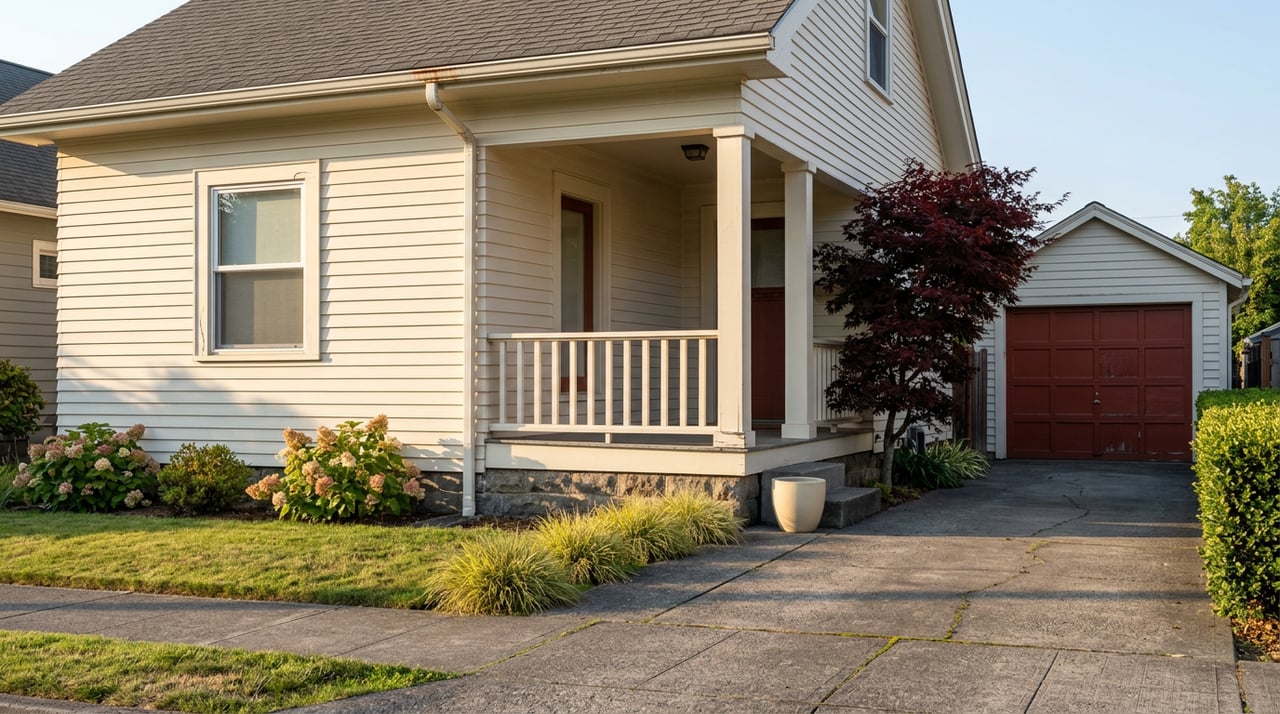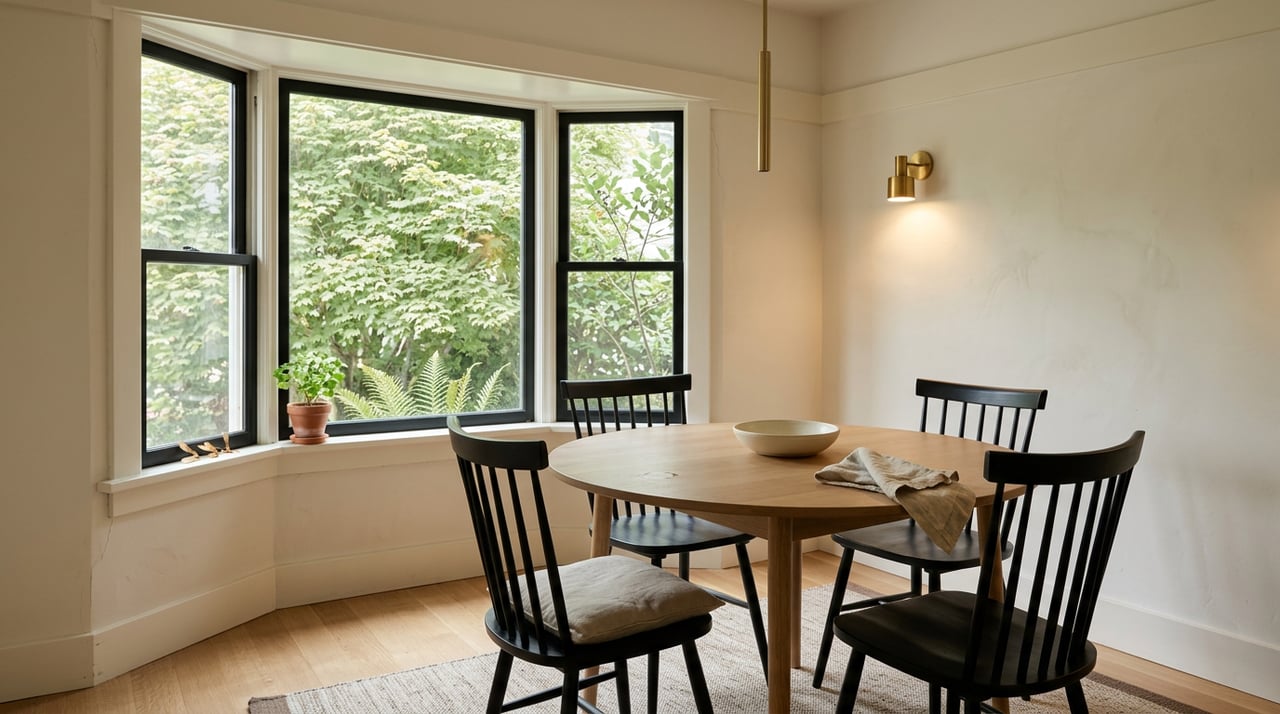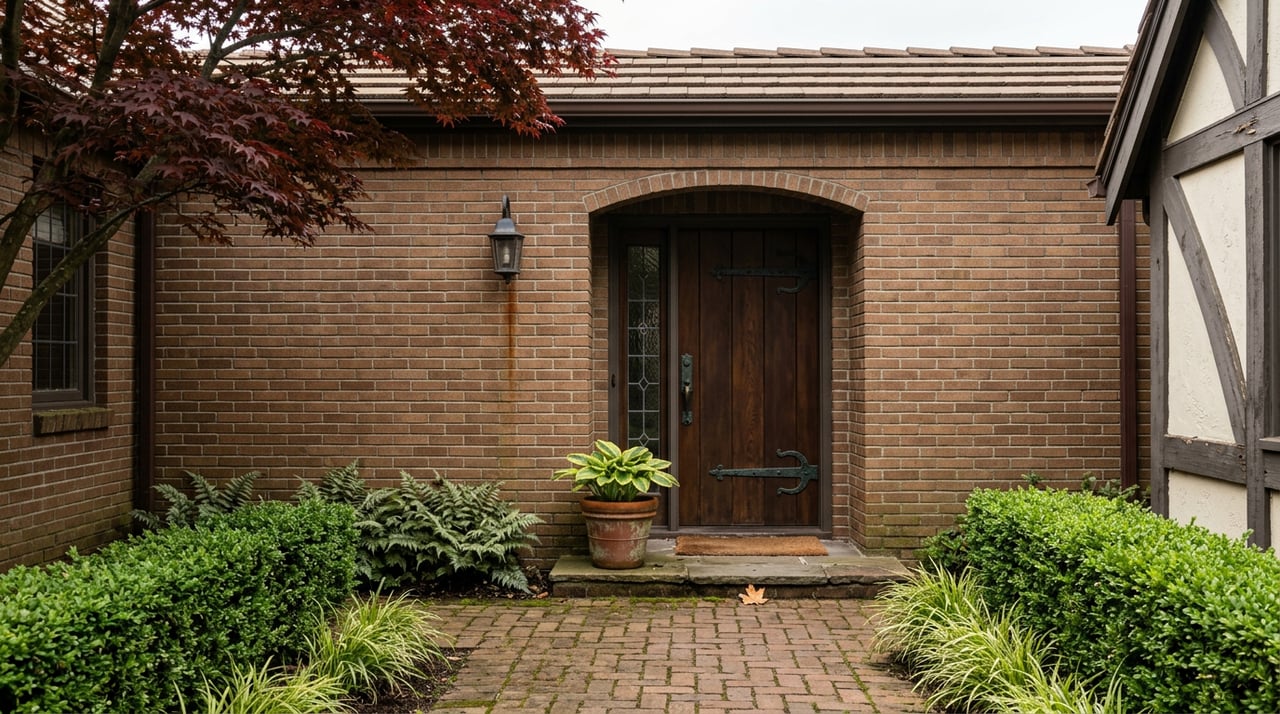
The first time most buyers walk into a Frederick Anhalt building on Capitol Hill, they stop noticing the price per square foot. The half-timbered turrets, the leaded glass, the coved ceilings that Anhalt's crews built into sixteen buildings across Capitol Hill, Queen Anne, and the U District before his development company closed up shop around 1930, do the work that staging photos try to fake. Buyers fall for the building before they've seen the unit.
That instinct is not wrong. It is just no longer the whole story. As of January 1, 2026, a change in Washington condo law means the building's paperwork can tell you something the leaded glass cannot: whether the association behind it has actually been saving for what comes next.
The exemption that used to protect older buildings from scrutiny
For years, Washington condo law drew a quiet line between old and new. Associations formed after July 2018 fell under the Washington Uniform Common Interest Ownership Act, a law that requires a documented reserve study and puts real teeth behind it. Associations formed before that date, including nearly everything built in Capitol Hill's defining eras, the Anhalt properties, the 1928 Rosina Court cottages on Capitol Hill's edge designed by architect William H. Whiteley, the 1919 warehouse-turned-condo now known as Trace Lofts on 12th Avenue, ran under older statutes that only encouraged reserve planning rather than requiring associations to opt into WUCIOA's stricter disclosure regime.
In practice, that meant a lot of Capitol Hill's most charming buildings could legally tell a buyer very little about their financial footing. A resale certificate might exist. A reserve study might not.
That gap closed on January 1, 2026. Senate Bill 5129, signed into law in April 2025, extended nine sections of WUCIOA, including the reserve study requirement, to every pre-2018 association in the state. The exemption that let older buildings skip the disclosure is gone. It does not matter when your building was built or which statute originally governed it. Every unit sale in Washington now surfaces the same question on the resale certificate: does this association have a current reserve study, yes or no.
What actually shows up in the paperwork now
Under Washington law, an association with what the statute calls "significant assets," meaning it maintains a roof, elevator, parking structure, or other shared component with real replacement cost, is required to prepare a reserve study and update it through a professional site visit at least every three years, with updates in between. That requirement lives in RCW 64.34.380 for condominiums, and it is the same statute that requires the resale certificate to disclose the study's existence.
If a building does not have a current one, the certificate cannot stay silent about it. State law requires a specific line of disclosure stating plainly that the association lacks a current reserve study and that the absence poses risk to the purchaser. That single sentence is now sitting in the document package for buildings that never had to produce it before.
There is one narrow carve-out. Associations of ten units or fewer can vote to waive the requirement, but only with agreement from two-thirds of the owners, and that vote has to be renewed every three years. Even then, the waiver itself has to be disclosed on the resale certificate. There is no version of this where the paperwork simply omits the question.
The law also caps what an association can charge to produce this document: $275 for an initial resale certificate and $100 for an update. That fee cap matters practically. It means the cost of finding out is small relative to what you're deciding.
Reading the number once you have it
Once the reserve study exists, the useful figure inside it is the percent funded, meaning how much of the recommended reserve balance the association actually holds today against what a professional study says it should hold. A building sitting above 70 percent funded is generally considered in strong shape. Below 50 percent is worth a harder look. Under 30 percent is the range where a special assessment, sometimes running into five figures per unit, becomes a real possibility rather than a hypothetical one.
Here is the specific chain worth walking through before you write an offer on an older Capitol Hill unit:
- Request the resale certificate early, not after your offer is already accepted. Some sellers will provide it before you write, and it costs the association only $275 to produce.
- Look for the reserve study disclosure line first. If it says no current study exists, that is not automatically disqualifying, but it means you are buying without the one document designed to price the building's future.
- If a study exists, find the percent funded figure and the age of the roof, siding, elevator, and plumbing systems listed in it. In a 1920s brick building, those systems have often already been replaced once. What matters is whether the next replacement is funded or not.
- Pull the last twelve months of board meeting minutes. This is where deferred maintenance and elevator troubles show up before they become an assessment.
- Ask your lender directly whether the building qualifies for standard financing. Agencies that back conventional loans review a building's reserve contributions and owner-occupancy mix as part of project approval, and a poorly funded association can complicate that review regardless of how the unit itself appraises.
What this means for offers on Capitol Hill's older stock
This law lands at a moment when Capitol Hill's condo and single-family markets are already telling two different stories. As of mid-2026, single-family inventory on the Hill was running near 2.1 months of supply, genuinely tight. Condos had loosened to roughly 4.4 months, a real gap that changes who has leverage depending on what you're buying.
That gap is exactly why the new disclosure rule matters more for condos than for houses. In a looser condo market, buyers have room to ask for the resale certificate before writing, room to walk if the reserve study reveals real risk, and room to negotiate price against a low percent-funded number instead of discovering it after the ink is dry. A seller in a 4.4-month market has less standing to rush you past that document than a seller in a 2.1-month one.
None of this makes vintage Capitol Hill buildings a bad idea. Buildings like The Bering near 14th and Thomas have held onto original wood molding, leaded glass, and brick exteriors for a century precisely because the associations behind them have kept doing the unglamorous work of maintenance. What changed is not the risk. Older buildings have always carried more capital-project risk than new construction. What changed is your ability to see it in writing before you're the one holding it.
FAQ
Does this new disclosure requirement apply to condos built after 2018 too? Those associations were already required to follow WUCIOA's reserve study provisions when they were formed, so the practical change is smaller for them. The law's real effect is on the pre-2018 buildings that make up most of Capitol Hill's historic character, which previously had the option to skip WUCIOA's stricter disclosure rules entirely.
What if the resale certificate shows no reserve study and the seller won't produce one? The certificate itself has to disclose that absence using the language the statute requires. That disclosure alone is useful information. It tells you the association has not documented its funding position, which is a different risk profile than a building that has a study showing it is underfunded. Either way, it is worth discussing with your agent and lender before your financing contingency runs out.
Is a low HOA fee ever a good sign in an older Capitol Hill building? Generally, no. A fee that looks low relative to comparable buildings often means the association is contributing less to its reserve account, not that it is simply well run. Pair the monthly fee against the percent-funded figure in the reserve study rather than looking at either number alone.
Vintage Capitol Hill buildings earn their reputation one detail at a time, the turret, the timber ceiling, the century-old brick. The new reserve study disclosure does not compete with that character. It just gives you a way to check whether the building's finances have kept pace with its charm before you're the one paying to catch them up.
If you're weighing a unit in one of Capitol Hill's older buildings and want a second set of eyes on a resale certificate before you write an offer, Real Estate With Sav is a call away. Let's Connect.