If you own a West Seattle home built before 1970, there is a decent chance a steel tank has been sitting in your yard since before your grandparents' generation renovated their kitchens. For years, the standard advice from agents and inspectors was simple: register it, insure it for free through the state, and stop worrying. That advice is now out of date. The insurance program that made buried oil tanks a low-stakes issue quietly ended in 2025, and what replaced it works nothing like it did before.
This matters more in West Seattle than almost anywhere else in the city. Along with North Seattle, it's one of the two areas real estate and inspection professionals point to most often when they talk about undocumented tanks turning up during a sale. If you're selling a pre-1970 home here, or writing an offer on one, the mechanics of this issue have shifted under your feet in the last year, and the old playbook will cost you time and money if you follow it without checking.
Why West Seattle specifically
Heating oil was the dominant fuel for Seattle homes from roughly the 1920s through the 1960s. When natural gas became widely available in the 1970s, plenty of homeowners switched systems but never removed the tank. The fill pipe got capped, the furnace room got a gas line, and the tank stayed buried under what is now someone's vegetable garden or driveway.
Steel underground tanks have a functional lifespan of about 20 to 30 years. Do the math on a tank installed in the 1930s through the 1960s and you're looking at steel that is now 60 to 90 years old, well past the point where corrosion is a possibility rather than a near certainty. Seattle's own analysis of state pollution data, done when the city was building its 2028 phase-out policy, estimated that roughly one in four buried tanks were already leaking, and officials at the time noted the real number was likely higher given how easily these tanks get forgotten.
West Seattle's housing stock, full of bungalows, Craftsmans, and older single-family homes on Alki, Genesee, Gatewood, and Fauntleroy lots, is exactly the profile where this shows up. A "don't know" answer on a seller disclosure form is worth investigating on any pre-1970 house, but it's worth investigating first here.
What actually changed in 2025
For decades, Washington's Pollution Liability Insurance Agency ran the Heating Oil Insurance Program, a no-cost policy that covered up to $60,000 in cleanup costs if a registered tank leaked. You registered before anything went wrong, and the state backed you if it did. It was passive protection: sign up once, forget about it, and the safety net was there if you needed it.
That program ended. The insurance policy itself expired on June 30, 2025, and PLIA stopped accepting new claims after July 31, 2025. Anyone with a claim already open for a release reported before July 1, 2025 is still covered until those funds run out, but no new tank owner can register into that old system anymore.
In its place, PLIA now runs the Heating Oil Loan and Grant Program, and it works on a completely different model.
| Old: Heating Oil Insurance Program | New: Heating Oil Loan and Grant Program | |
|---|---|---|
| How you got in | Register the tank anytime, no cost | Apply during a specific open window |
| When funds became available | Automatically, once a leak occurred | After a Preliminary Planning Assessment and environmental review |
| Total available | Up to $60,000 for cleanup | Up to $75,000 total, including up to $60,000 for cleanup |
| Documentation required | Minimal, just registration | Financial documents for loan portions, reviewed by the state |
| Timing | No deadline, ongoing enrollment | Spring and winter cycles, open about 45 days each |
The 2026 spring cycle ran from May 4 through June 18. If you missed it, the program structure suggests another window opens in winter, but you have to be watching for it rather than assuming coverage exists the way it used to. Funding is also prioritized by risk, meaning confirmed leaks and tank removal get funded ahead of infrastructure upgrades alone, and loan portions require the kind of paperwork you'd expect from a mortgage application, not a quick registration form.
The practical effect for a seller: the old system meant a discovered tank was rarely a crisis, because insurance was already sitting there. The new system means a discovered tank is now a project with a timeline you don't fully control, sitting on top of a home sale that does have a timeline.
What you're legally required to say
Washington's standard seller disclosure, NWMLS Form 17, specifically asks whether you know of an underground oil tank or contaminated soil on the property. You're only required to disclose what you actually know, but "I don't know" is a real answer that carries real consequences if it turns out to be wrong on a house with a documented history of oil heat.
Once a buyer receives that disclosure, Washington law gives them a three-business-day window to rescind the purchase agreement based on what's in it. If you amend the disclosure later, that window restarts. In practice, this means an oil tank that surfaces mid-transaction doesn't just create a repair negotiation. It can reopen the buyer's ability to walk away entirely, on a clock that starts over every time new information comes in.
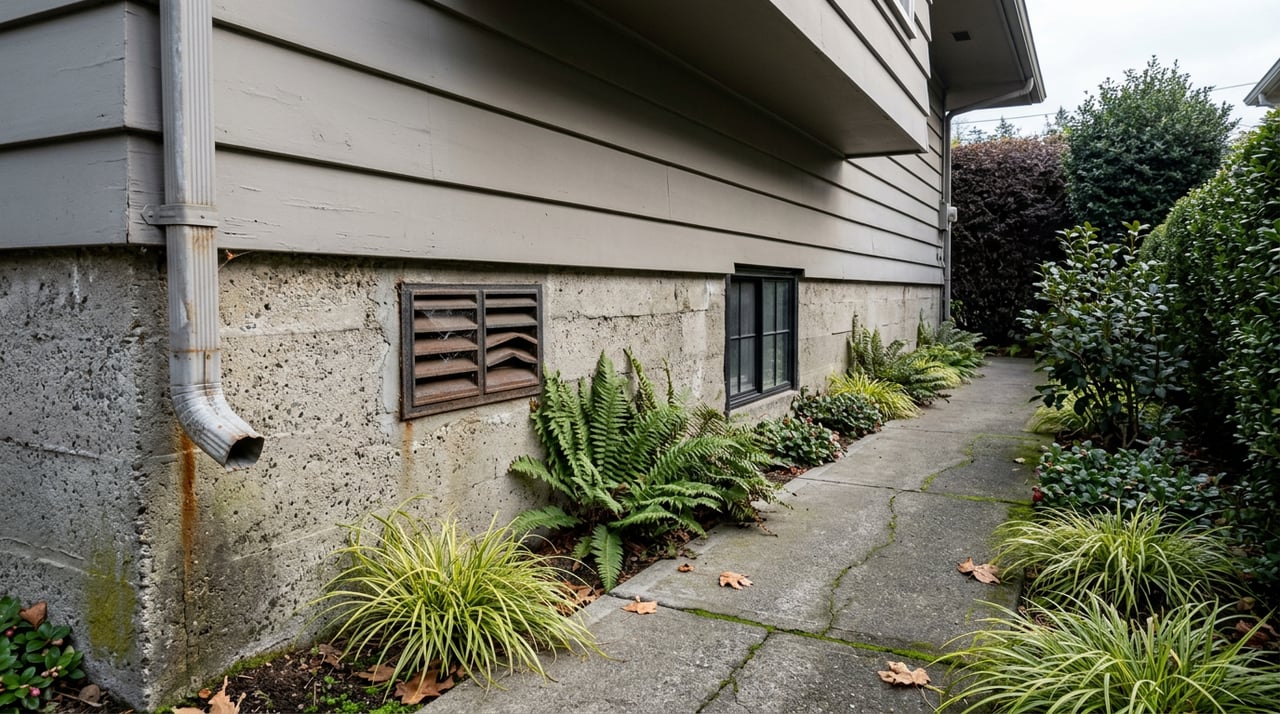
A licensed home inspector can flag the visual signs, an old fill pipe, a capped vent, copper fuel lines running to nowhere, but confirming an actual tank underground requires a professional sweep with a metal detector or ground-penetrating radar. Several companies in the Seattle area, including Filco Company, which has worked in this space since 1980, offer that service specifically because visual indicators and confirmed tanks are two different things.
What it costs, and why the order of operations matters
Decommissioning costs vary enormously depending on what's actually in the ground:
- In-place abandonment with no contamination: roughly $700 to $1,000
- Full removal with no contamination found: roughly $5,000 to $10,000
- Removal with contamination requiring soil remediation: typically $10,000 to $15,000
- Complex contamination cases: can exceed $100,000
The gap between the first number and the last is the entire argument for testing before you list rather than waiting for a buyer's inspector to find something. A clean tank decommissioned proactively is a modest line item you control. The same tank discovered during a buyer's due diligence becomes a negotiation you don't control, on a timeline the buyer sets, with a rescission window hanging over the deal.
Decommissioning itself isn't a weekend project you hire off a search result and forget. Seattle Fire Code requires a permit, Permit Code 6103, issued by the Seattle Fire Department before any work begins, and that permit goes to the certified contractor doing the work, not the homeowner. Once the job is done, the ICC-certified decommissioner has 30 days to file completion paperwork with the fire department. Skip that step and you're left with a decommissioned tank you can't actually prove was decommissioned correctly, which is its own problem at closing.
The 2028 deadline is still coming
Underneath all of this sits a city ordinance that hasn't gone away: Seattle requires all heating oil storage tanks to be decommissioned or replaced with a modern tank no later than December 31, 2028. That deadline applies whether or not you're planning to sell. If you're still heating with oil today, that clock is running regardless of your real estate plans, and it's one more reason a tank sitting quietly in your yard is not a problem that gets easier to ignore over time.
Before you list, or before you write an offer
- If your home was built before 1970 and you don't know its heating history, ask a licensed inspector to check for visual indicators before you do anything else.
- If indicators are present but you can't locate a tank, get a professional sweep rather than guessing.
- If a tank is confirmed, get it decommissioned through a properly permitted contractor before you go on market, not after an offer is already signed.
- If you suspect a leak, look into the current Heating Oil Loan and Grant Program timeline before assuming funding will be there when you need it.
- If you're buying an older West Seattle home, read the Form 17 environmental section closely and ask directly about heating history, even if the box says no tank is known.
FAQ
How do I find out if my West Seattle home has a buried oil tank? Start with a visual walkthrough for fill pipes, vent pipes, or copper fuel lines, ideally with a licensed inspector who knows what to look for. If your home shows signs of a former oil system but you can't locate the tank, a professional sweep using metal detection or ground-penetrating radar can confirm it.
Do I have to disclose a tank I'm not sure exists? Washington's Form 17 only requires you to disclose what you actually know. But a "don't know" answer on a pre-1970 home with any evidence of former oil heat is worth investigating before you list, since discovering the truth after disclosure can reopen the buyer's rescission window.
What happens if a tank turns up during a buyer's inspection? It becomes a negotiation on the buyer's timeline, not yours, and it can trigger a new three-business-day rescission period once the disclosure is amended. This is exactly the scenario proactive testing is meant to prevent.
Is decommissioning required even if I'm not selling? Yes. Seattle's ordinance requires all heating oil tanks to be decommissioned or replaced by December 31, 2028, independent of any sale.
Buried tanks are one of the few inspection issues in Seattle where the smartest move is almost always to get ahead of it rather than wait to see what comes up. If you're weighing whether to test, decommission, or price a West Seattle listing with this kind of unknown still in the ground, I'd rather walk through the specifics with you now than have it surface as a surprise later. Real Estate With Sav is here when you're ready to talk it through.